
The TUM Public Science Lab launch will take place on 9th October 2025. To sign up, see the signup form, or see more information on the launch page.
The launch will include a number of stalls featuring participatory and publicly-engaged partner projects. The details for these stalls are as follows:
1. The Research Game
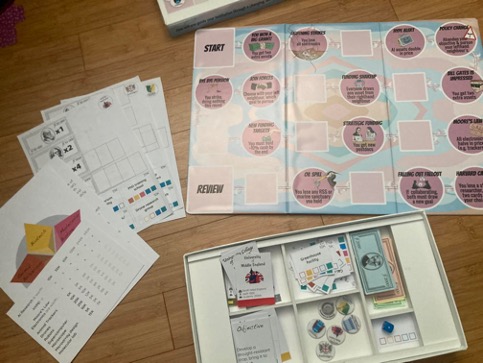
Join members of the Chair of Philosophy and History of Science and Technology to play ‘the Research Game‘. The Research Game is a board game designed to explore in a fun way the dynamics of academic research, including the asymmetries and injustices that permeate the way knowledge is produced around the world. It was developed by the Open Science Project. and comes in German, UK, Italian, Spanish and global versions, with players representing different fictional academic institutions.
2. Pianeta Lab
The PianetaLab is an initiative co-organised by the Public Science Lab to support innovative, community-driven, impactful collective action for socio-environmental change in Italy. It unites activists, citizens, academics, experts, companies, artists, associations and institutions to create concrete and sustainable solutions. Come along to discuss our current and future publicly engaged work.

3. Philosophy of Open Science Project
The Philosophy of Open Science Project (PHIL_OS) is an empirically grounded philosophy of science project that explores the conditions under which movements towards open science can promote good research practice. It focuses on the diversity of research environments around the world, and particularly collaborations beyond academia, and how this diversity can be leveraged towards positive research practices and outcomes. The project has been running for several years and across multiple disciplines, countries, and case studies. At the stall, members of the project will showcase and discuss their projects, methods, collaborations and future plans.

4. Ethical Data Initiative
The Ethical Data Initiative (EDI) is a non-partisan platform fostering open discussions on data ethics, informed significantly by philosophical, historical, and social studies of science, with a focus on equity and engagement across different domains of data work for public interest. It is jointly coordinated by the University of Exeter and the TUM Think Tank. The EDI engages in a range of activities across teaching, research, and engagement, notably including ‘data clinics’, in which students work with partners from beyond academic contexts.

5. PSL Water initiative
Here, we showcase some of the work currently being developed at the Public Science Lab, in particular a research strand focused on water. In times of climate change, issues such as water supply, water retention in the landscape, and dealing with extreme weather events are becoming increasingly important. In general, the way we work with water is being put to the test, in various guides: in public spaces as a common good; in connection with private lives; and as an important ecological and biogeochemical substance.
How we relate to water is therefore a matter of strong social significance. However, the water cycle is often presented in an idealised way, with little recognition of the roles played by humans and many other forms of life in shaping how water is transformed and moves around the planet. Work at the Public Science Lab will focus on various parts of what is sometimes referred to as the ‘hydrosocial’ cycle, in particular, how parts of it are conceived, altered, and communicated, situating this in the context of Munich and the diverse groups of people who engage with water in different ways.
This project draws on work from ethnographic encounters, artistic intervention, and contemporary and historical scientific research. Through this, we experiment with different modes for learning and researching with scientific and everyday-water experts. These include formal and informal educational institutions such as museum, schools, and libraries, for example, interactive workshops for school children to introduce them to key concepts at the interface of water biogeochemistry, social sciences, and philosophy of science.

6. Chemistry Game
CREISE (or Chemische Reise) is a game-based science communication intervention developed in collaboration with the Deutsches Museum as part of a master’s thesis in the MA RESET programme at TUM. It emerged from an interest in exploring how museums can serve as living laboratories, leading to a close collaboration with the museum’s educational department and the Chemistry Exhibition team that combined academic inquiry with practical curatorial work to create a new educational offering.
Originally designed for the Chemistry Exhibition, the programme uses playful formats –quizzes, experiments, and interactive storytelling– to foster dialogue around the role of chemistry within the sustainable development framework of the circular economy. It targets school groups (Year 8 and above) as well as adult audiences in a two-hour moderated session that blends exhibition and laboratory through physical and digital elements to support collaborative knowledge production around these topics.
For the Public Science Lab Launch, the “street” version of CREISE will be installed, inviting spontaneous participation –whether to reflect on chemistry and sustainability through playful interaction, or to learn more about how, when viewed through the lens of the “event,” such science communication interventions turn (museum) visitor programmes into dynamic spaces of exchange, where publics and scientists can meet, share ideas, and co-produce knowledge.

7. Chemistry Group
The colleagues in the Anthropology of Science and Technology are conducting a collaborative ethnographic research project which seeks to examine what it means to practice chemistry and chemical manufacturing under conditions of late industrialism – when the global, human production of chemicals has irretrievably altered human and animal biologies, and ecologies around the world. Through interviews with major figures within the field of green chemistry, the group investigates the environmental politics, underlying epistemology and ontology of this field.
Through this research project, the group is developing transdisciplinary collaboration with green chemists to bring insights from social scientific inquiry, and particularly through engagements with diverse publics, in conversation with the work of green chemists. Ultimately, the aim is to contribute to a transformation of chemical manufacturing that centers the needs of various publics and their ecologies.

8. MCube
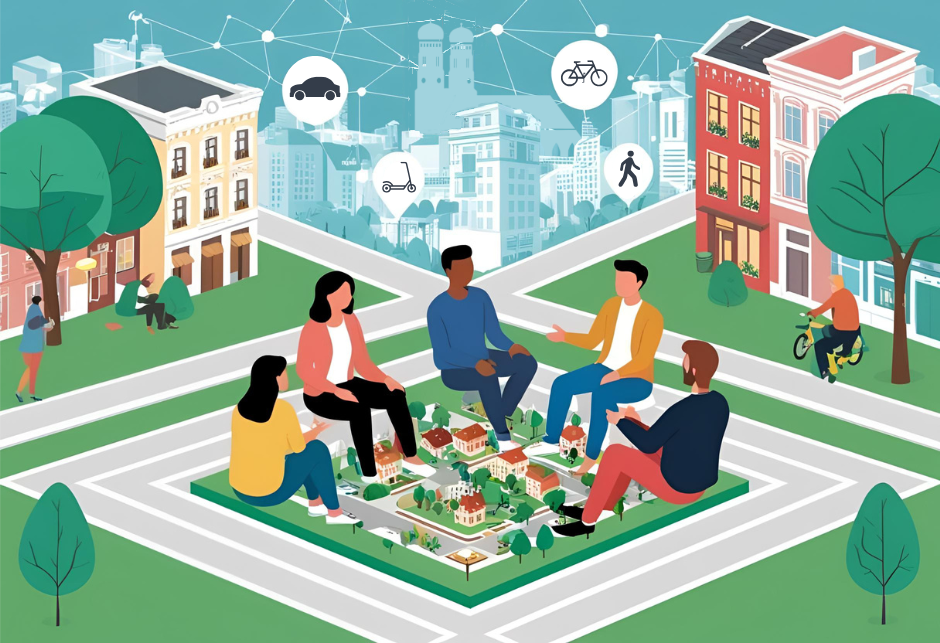
ReMIX (Responsible Mobility Innovation & eXperimentation) is a social-science project on how to govern the mobility transition – the shift toward cleaner, safer, more accessible and affordable transport systems. It is not only about new vehicles or apps; technological change must go hand-in-hand with social change, because mobility is entangled with livelihoods, equity, jobs, and urban space. Social science helps clarify who benefits or is burdened, how decisions are made, and which values and trade-offs guide innovation.
We study transition governance (rules, roles, and decision processes) and analyze what happens in real-world experimental spaces such as living labs. To open research to multiple publics, we run dialogue formats with city officials, companies, and civil society, and provide coaching for local trials, and curate a Mobility Experiments Atlas for peer learning.
During the Public Science Lab launch, we will put participants into the role of technology development teams and let them try out tools from our “Responsible Mobility Innovation” toolkit that turn principles into practice: a Real Personas Council to bring lived experience into project choices, a Scenario Workshop to stress-test designs against unlikely but consequential futures, and prompts for reflection to examine roles and values in teams. Together these hands-on formats invite publics into problem framing, design choices, and course corrections. Further, we provide a virtual map of Munich’s mobility living labs for visitors to engage with current experiments of future mobility in the city.
9. New York Gallatin Wetlab
The Gallatin WetLab is an experimental art-science laboratory that permits students, artists, and scientific researchers to create, develop, and display projects that engage with environmental crises. We engage in interdisciplinary, public-facing teaching across the environmental arts and sciences and encourage experiential learning with community partners on the urban coastline. The ‘wet’ in WetLab is a playful take on a standard scientific wet lab. It signals the porous boundaries between disciplines and a commitment to collaboration with organizations that work with marine science and art toward engaged public programming and pedagogy. Through our historic house on Governors Island in New York City, WetLab brings together scholars and artists through interrelated art-science programming that includes fieldwork, exhibitions, workshops, classes, events, and residencies. WetLab is also a teaching gallery that is committed to involving students with emerging and professional artists working in art-science paradigms for the curation of exhibitions. We offer a flagship for art-science at New York University. Our key partners include the Harbor School (a maritime-based public high school on the island), Billion Oyster Project, NY Virtual Volcano Observatory, the NYUrban Greening Lab, GrowNYC, Earth Matter, Audubon, Flux, Swale, Downtown Boathouse, Bee Conservancy, Shandaken Projects, West Harlem Art Fund, The Climate Museum, Urban Soils Institute, and The Hudson River Park’s River Project.

10. Art-Science-Tech Exhibition
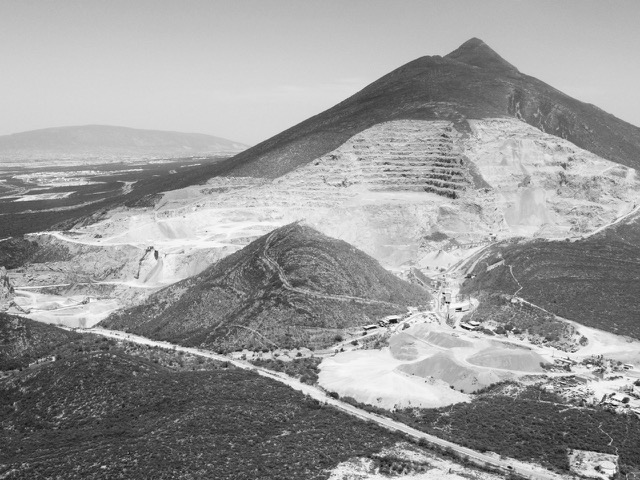
The exhibition “Ecologies of the Machine. Landscapes of Cement and Power,” upon an initiative of the Chair for Sustainable Urban Environments, Prof. Anne Rademacher, and hosted by the Public Science Lab, will be on display from October 15 to 24 in Pavilion 333 at TUM. Originally developed at the architecture space Proyector in Mexico City in 2023, curated by Tania Tovar Torres (who will be present at the launch), and recently on display at Vi Per Gallery in Prague in 2025, the exhibition in six video essays of archival material as well as landscape photography showcases the research of Erika Loana (Atlas Materia Prima) and Kim Förster (University of Manchester). Through collaborations with the TUM’s Department of Architecture, School of Engineering and Design, as well as the Architekturmuseum, “Ecologies of the Machine” will appeal to both professionals and the general public.
(Photo: Atlas Materia Prima)
11. TUM Think Tank – Quantum Social Lab
Details TBC
12. TUM Think Tank – Urban Digitainability
The Urban Digitainability Lab at TUM Think Tank sees itself as a transformation laboratory whose goal is to help shape sustainable digital urban development. It collaborates with German city administrations, scientists, and stakeholders who have experience in the fields of technology and sustainability.
Our methods & formats
– The formation of peer learning networks, also known as “communities of practice,” serves to facilitate the exchange of knowledge between municipalities and experts.
– Capacity-building and training programs for employees in urban areas develop skills for the so-called “double transformation” – digital & sustainable.
– Co-creation workshops, such as “student clinics” or “solution forums,” serve as platforms for direct interaction between practical application and theoretical research.
– Impact measurement and applied research: Tools and indicators are being developed that can be used not only to plan urban innovations, but also to evaluate and further develop them in terms of their impact.
Partners of cities and municipalities
We show how city administrations can be addressed with participatory formats, what forms of cooperation look like, and which methods help to implement change in a practical way.
 Public Science Lab